Video Transcript
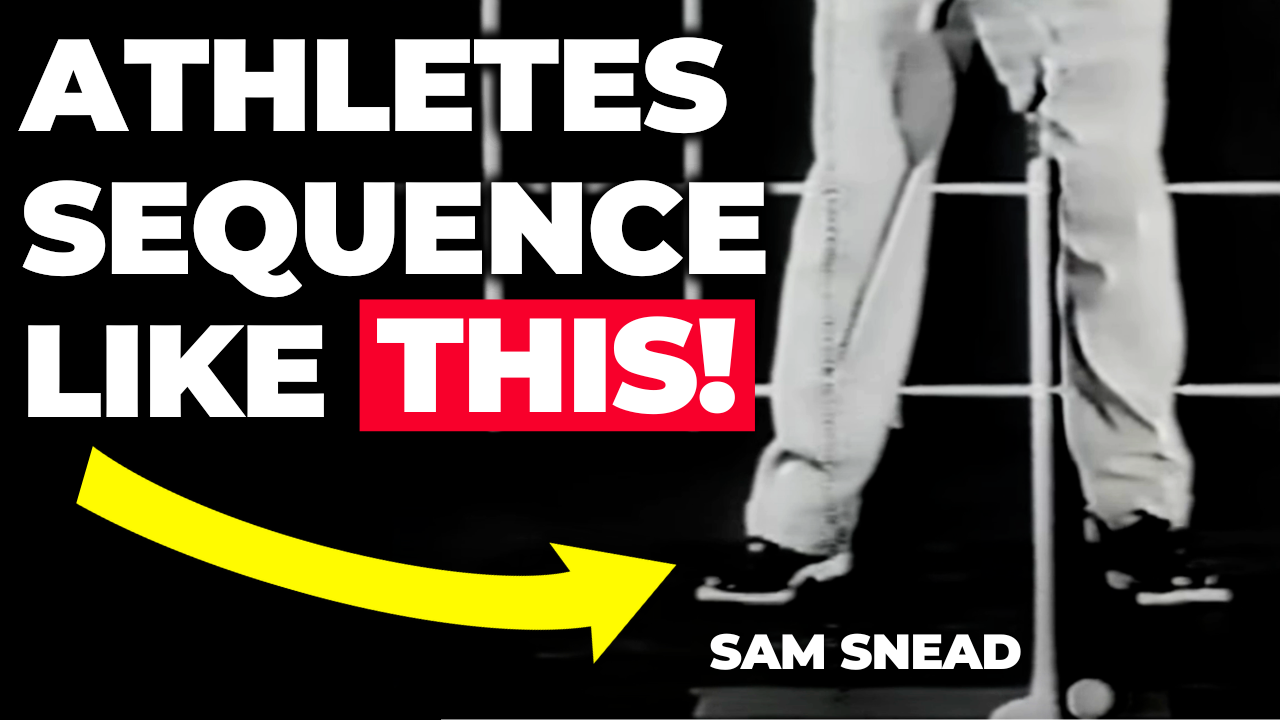
The Most Athletic Golf Swing Sequence I’ve Ever Felt! (MOVE LIKE THIS)
Finding an Athletic Golf Swing Sequence
“So, for a long time, I was searching for a sequence that would allow me to sort of walk into a shot, feel like an athlete, like I would in other sports, set up, and just feel natural, feel free, so that I could be allowed to make a nice smooth move through the ball and yet still have some consistency on the golf course.
So, pretty good there. That felt like a nice athletic eight iron. So, for a while I was a little lost with do I want this sort of big move off the ball that felt maybe dynamic but left me kind of in a spot where I felt like I needed to make a big move back to the ball or did I feel more stacked up on top of it left where maybe I could achieve really good contact and low point but didn’t feel like it was as dynamic and free. So, that was kind of what I was stuck in between.
How it Inspires a Natural Golf Swing
But today, I want to share with you that sequence, that athletic golf swing sequence that I found that allowed me to feel like I had some good footwork, good freedom, and could move naturally in the golf swing. So, thanks for stopping by. Henry Fall here of Milo Lines Golf and we are in the lab today and we’re going to be talking about that athletic golf swing sequence. Something we would see from a lot of great players throughout history, but that’s something I sort of discovered.
I would say maybe seven or eight years ago and I’ve sort of finally tuned over the years and I want to share with you that sequence, how to get it, how to train it, a few simple drills. We’re going to give you three simple drills to really bring about that sequence that we see from a lot of great players. But first, if you are new here, I’d really appreciate if you do subscribe. I come out with new content regularly. And if you find this video helps you, come on over to my linesgolf.com.
We got coaching analysis for you every two weeks. and our full swing playbook, the athlete swing. Okay, so let’s hit one more. You saw that first one pretty darn good little eight iron there. I had some good freedom. So, let’s see if we can replicate that. Feel like I have some movement, feet moving around, and make a nice big smooth swing. Okay, pretty good. So, I like how that my footwork was. It felt big. It felt free, felt athletic.”
Ground Force, Pressure Shift, and Opposing Forces
“So, before we get into those drills though, I want to quickly outline this sequence and what you should be kind of thinking about and feeling in your golf swing. And specifically, in some past videos, I talked a little bit more maybe about uh pelvis up. So, what your upper body, arms, arms, hands, wrists are doing. But today, we’re going to talk more ground up feet, legs, and how that is moving.
So you can kind of use the ground but also keep yourself somewhat centered and really make some dynamics in your golf swing. So real quick, just the basics of this sequence. We want to be opposing the direction of this club in space. Okay? And we’re gonna we have a perfect drill to work with this. But basically, if this club is say say we were going to throw this club down range to prevent that from getting released out of our hands, right, or getting pulled, we have to oppose that.
Pressure Shift vs. Weight Shift
So, we have to get pressure and maybe a little mass moving back the other way as it’s going that way. We have to oppose that right now. So, say I start going that way. I pose it. Now, on the flip side, as you would see in a back swing, as that club’s going up and over here, same thing. I got to oppose it back this way. So, this pressure is preceding motion, right? We’re getting our pressure to kind of fight the movement of that club.
And now we’re starting to get free energy, basically free pulls on the club without just using our hands and arms. And you start to really smooth things out. So just thinking about it that way where we can create some opposition is a really freeing experience and you see it with other sports. Like if you are playing tennis, you’re getting ready for a forehand, you’re going to step as the racket’s going back. Boom.
Now you got your little forehand. If you’re throwing a ball, Tom Brady, he’s stepping as the ball’s going back downfield touchdown. The sequence is similar across other sports, but yet us golfers, we get this golf ball on the ground and it’s like, man, we get stuck. There’s not much movement before we go.
We get stuck over it and that white ball is basically paralyzing you. You can’t move, right? And then from there, it’s like your hands and arms really want to take over and it doesn’t become a very systematic move. So you just end up kind of pulling and slapping at it and doesn’t feel very free. Okay. So let’s try to build a more athletic sequence and a more natural move.
Horizontal, Vertical, and Rotational
The other thing real quick here in the past you may have tried to work on your sequence but maybe it felt, you know, too lateral, too much mass moving. You felt like you were swaying. Well, if you’re doing this correctly, if you’re opposing it correctly, it should keep you relatively centered. So, even though I’m moving my pressure and my mass a little bit, you can still see I’m staying fairly centered.
At the same token, you know, it’s not one of these like kind of set up left, stay left actions. While that can be good for certain shots, in my opinion, as you get up to longer clubs, especially, you feel like you just get a little stuck and it doesn’t feel as dynamic and free. So, I like to think there’s somewhat of a middle ground and then shot to shot, it might vary.
And so, as I’m having this club kind of circle around me, yet fight it and oppose it with my my footwork, my leg work, you can see how my heels are starting to move off the ground, my legs are starting to have some play, and that is very powerful as well, just like I was showing you with those other sports.
And doesn’t that just look smooth on its own right there? Now, if I grow it, you can start to have a nice golf swing. So, that little action is what we’re going to get into now. So, let’s go into that first drill.”
Drill 1: Kettlebell Swings for Dynamic Golf Swing Plane
“Okay. Drill number one, kettle bell swings. If you’ve been following along for a while, you’ve probably seen us use this one, me and Milo. But if you haven’t tried this yet, this is a really, really good one for your golf swing. I really highly suggest it. So, I got 20 lb kettle bell here, and I’m just going to get set up in my golf posture here. Nice and relaxed. Arms, fairly rounded in the upper part of my back, and head and neck kind of relaxing down.
Okay. So now I’m gonna start swinging this a little bit. I’m gonna start swinging it to the target. And you’re gonna see my right heel kind of gets pulled up a little bit. And now I’m gonna start going the other way. So I’m creating this little opposition. I’m only swinging hip high to hip high. But you can see how I’m opposing that kettle bell with my pressure and a little bit my mass.
So I’m opposing this thing. keeps me relatively centered but also feels dynamic and athletic. If we turn this from down the line as well, you’re going to see that this kettle bell is kind of on this little arc too or this it’s on the plane more or less. Right? I’m not trying to keep this on a straight line. Now I’m starting to wind correctly in my bends and on this plane. So if I made it a little bigger, [sighs] that’s pretty dynamic and that is on that plane.
A Golf Exercise Worth Training
So maybe don’t make those big swings right out of the gate and maybe start with a little lighter weight, but just just the feeling of that that little motion is really really nice. And it it keeps you centered. Like I said, I’m not really moving all that much.
There is some movement in the golf swing. It’s okay for your head to move a little bit. It’s okay for your mass and your especially your pressure to move a little bit. Have a little freedom like you would in other sports. Okay, so that’s kettle bell swings.”
Drill 2: Downshift Board Training for Weight Shift Timing
“The next one I really like and we use this a lot of golf schools and don’t necessarily recommend hitting a ton of balls with this, but I do like the the feel of it. So, we’re going to grab a downshift board here. And all this is really doing is getting you to move your pressure a little differently and use your feet a little differently.
I’m going to get that ball set up. I’m going to put the ball just forward of the logo there. And what I like here is kind of like what you saw those kettle bell swings where I started forward. I like to have the the board a little left first. So that gets me in my left side a little early to kind of trigger trigger right and then use that right side early earlier than most amateurs to get back left. We want to be using that right side pretty early. We don’t want to hang out there and then push late.
That’s just going to create some other issues. So I want to be using that left side a little early there to start. Then I get into right. I max that out pretty early. And now I’m starting to get back left. So I’ll have that ball a little bit forward to the logo. And then I’m gonna start a little left, right, left. You can just see the sequence of that as I go.
Growing the Sequence
And the board’s going to tend to rotate a little bit. I wouldn’t necessarily be hitting balls full right out of the gate. You might want to just, you know, let me hit one slow for you guys just to show you. probably want to just start with some little, you know, 100 yarders. 140. Okay. So, nice little smooth eight iron.
And that’s just giving you that sequence without overdoing it. So, again, the board can spin a little bit. Okay. So, now we’ll do this uh exercise face on with a downshift board so you guys can see. So, I have the logo somewhere roughly in the middle of my stance, maybe a little forward. And then the ball is a little left of that logo. So I can feel like I especially an iron stay a little more on top of it, but a little left here out of the trigger right.
Timing it…
And then as it’s going back, as I’m winding up, I’m starting to get back left fairly early, earlier than probably most of you. So I’m winding and that’s leading me into that lead side. That’s the change of direction we’re after. So here I go here. A little left, right, left. And that’s kind of the flow we’re after there. So you can see how my feet had a little play.
Again, this might spin a little bit, so start slow. You don’t need to hit full shots with this necessarily. And then a little pro tip, you might want to have piece of turf or something just so you’re hitting off a uh level lie there with your board. So that would look more like this where it’s maybe a little bit more in line with the board. Okay.
So the downshift board is a really, really good tool. I’ll leave a link below with a little discount for that if you’d like to snag one of those for yourself.”
Drill 3: Golf Heel Taps for Rhythm and Footwork
“But let me go to that final drill. This one is like the culmination of everything. Puts it together and it’s something that you could bring to the golf course. You could play with it, which is really, really nice. And it really ties into what you would see from a lot of the great Sam, Jack Nicholas, how we use our feet. And now we’re starting to do just some heel taps, similar like doing some step drills.
Those can be really good, too. What I like about the heel taps though is it it feels a little bit more centered. You’re not making these big moves. It feels more wind and unwind, but you’re still letting your feet have a little play. So, really nice for the sequence there.
So, we’re going to start with a little bit of a toss to the target left. Let that right heel come off. And then as this is going the other way to the right, now your left heel comes off. And as you wind up to the top, then your left heel is gonna come down as you go through. Okay? I’ve had a lot of people do this. It’s really a lot more difficult at first than you might think, but if you can get this, you’re going to have way more freedom.
Fancy Footwork
I think you’re going to get some more distance out of it, but you’ll also feel pretty uh natural and on top of the golf ball, so you don’t feel like you’re wandering all over the place. Okay. So, right heel, left heel, like that. You can start to have, if you need to start at a little shorter length, you can, like we did with the kettle bell swings. But now, I’m going to let this be bigger on both sides.
Let’s see how it goes here. I’m going to let that right heel come off a little bit. Have a little trigger left. So, club out here, and then go and go. Okay, so it’s going to be right heel up, left heel up, left heel down. How’ we do? Felt pretty flowing. Little push cut out to the right. Let’s try one more. And let’s just make it even bigger. Let me have a little fun with it. So, really big left right heel off. That felt pretty nice.
Like a Dance…
That one was a little bit more of a draw. I want to show you from behind as well. left, right, left. Okay. So, this one I have from behind. So, you can see how my feet move and how it they oppose the direction of the club. Here I go. Left, right, left. You can see how that movement comes to be. Show you face on left, right, left.
So, pretty tough drill. I encourage you to start with that one slow, but it is really dynamic once you get the hang of it. Maybe do it off a tea at first and then you can really play with that more or less. You see a lot of great players have the right heel come off actually a little bit before they take the club away. Pretty cool little action there. Um, and it just gets you feeling a little free. That nice athletic sequence we’re after.”
Unlocking Natural Athleticism and Triggers in the Golf Swing
“So, I encourage you to try those three drills. I just think they’re exceptional at really bringing about a more natural sequence and what you would see again from other sports. How do we make golf more like those other sports? Cuz I bet those came maybe a little bit easier to you than students that I see daytoday kind of struggle once that white golf ball gets down the ground.
So, how can we create some freedom, some good movement? The great had triggers. The great had some waggles. There was some movement even before the movement. So even tie that in as well. But don’t be afraid of movement. Movement is good. Movement is healthy. Can it be too much? Can it be too lateral or one way or the other? Sure. But that’s why I like these sort of heel taps and the downshift board, the kettle bell swings. It’s more like if I was to do like a speed skater.
Keeping it Centered
When I do a speed skater side to side as an exercise, that pressure is landing into each foot, but it’s also pushing me back and it keeps my upper body, my torso, my pelvis fairly centered within those landing areas, so to speak. So, that’s more what you would see in other sports, too. So, you’re creating enough side to side to keep you relatively centered. It doesn’t have to be a big move. So, here I go again.
One last one for for fun here. Get some waggles going. Get that nice trigger, some nice movement, and let it go. So, that belt felt pretty big and free for me. And that’s something I can feel like I can take to the golf course, still find a fairly high level of consistency as well.
So, before you go, if you again, if you need personalized coaching on your game, come over to my website. You can work with me one-on-one in person here in Mesa, Arizona at Dobson Ranch Golf Course or join our online academy for coaching every couple weeks there and our full swing playbook. If you are new here, I’d really appreciate if you subscribe as well.”
For Personalized Help With Your Game…
I’m Henry Fall, and I’m dedicated to helping golfers of all skill levels through a personalized approach blended with our athletic swing principles. Whether you are a local here in Mesa, Arizona, or a golfer on the other side of the world, I am here (along with our full team at Milo Lines Golf) to provide the roadmap you need to strike the ball with more confidence. You book 1-on-1 golf lessons in person at Dobson Ranch Golf Course and Back Nine Golf in Gilbert, where I offer comprehensive coaching tailored to your unique swing. Or join us for a golf school for an unforgettable experience!
And, for those who can’t make it to the desert or would like an actionable step-by-step program, join our Online Academy today for instant access to our full swing playbook, The Athlete’s Swing® plus personalized swing analysis every 2 weeks! Don’t let another season pass you by. Book a lesson, attend a school, or join our Online Academy today and let’s level up your golf game.
Leave a Reply